
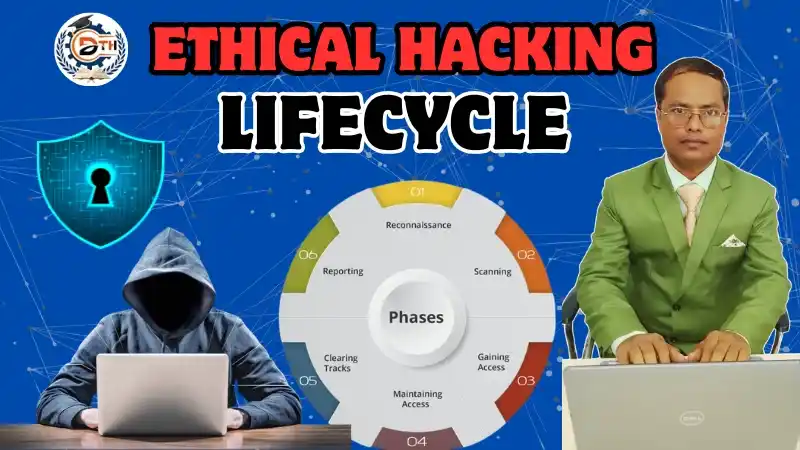
Aaj hum Cyber Security ke ek bahut important topic Ethical Hacking Life Cycle ko detail mein samjhenge.
Agar aap Ethical Hacking seekhna chahte hain, to sirf tools aur commands chalana seekhna enough nahi hai. Ethical Hacking mein ek proper process aur methodology follow ki jaati hai.
Ethical Hacker authorized permission ke saath security testing karta hai. Iska main objective hota hai:
- Security weaknesses ko identify karna
- Vulnerabilities ko analyze karna
- Security risks ko samajhna
- Organization ko vulnerabilities fix karne mein help karna
Isliye Ethical Hacking mein tools se zyada methodology aur proper process samajhna important hai.
Main Phases Of Ethical Hacking Life Cycle
Ethical Hacking Life Cycle ko different phases mein divide kiya ja sakta hai. In phases ke through tester systematically target environment ko understand karta hai, vulnerabilities identify karta hai, unka impact verify karta hai aur finally report aur retesting karta hai.
यदि आप Ethical Hacking Course सीखना चाहते हैं तो हमारी Technical Team से बात कर सकते हैं!
(HR: 9034756711 | MD: 9017940459)
Phase 1 – Reconnaissance
Sabse pehla phase hai Reconnaissance.
Simple words mein Reconnaissance ka meaning hai target ke baare mein information collect karna.
Ethical Hacker sabse pehle ye samajhne ki koshish karta hai ki:
- Actual target kya hai?
- Target se related kaunsi information available hai?
- Kaunse domains connected hain?
- Kaunsi technologies use ho rahi hain?
- Publicly available information kya hai?
Example
Maan lijiye kisi organization ki website hai:
www.xyz.com
Is phase mein authorized tester organization ke domain aur publicly available information ko research kar sakta hai.
Complete Lesson in This Video; So Watch Completely!! 👇 👇 👇
Technology, public information aur target se connected assets ke baare mein information collect ki ja sakti hai.
Iska purpose ye samajhna hota hai ki potential security risks kis direction se aa sakte hain.
Reconnaissance Ke Do Approaches
Reconnaissance ko generally do approaches mein samjha ja sakta hai:
- Passive Reconnaissance
- Active Reconnaissance
1. Passive Reconnaissance
Passive Reconnaissance mein tester target system ke saath direct interaction nahi karta.
Ismein publicly available information ka use karke research ki jaati hai.
Passive Reconnaissance Mein Kya Dekha Ja Sakta Hai
- Public websites
- Search engine information
- Public documents
- DNS-related information
- Publicly available organizational information
Simple words mein, target ko directly interact kiye bina usse related available information collect ki jaati hai.
2. Active Reconnaissance
Active Reconnaissance mein target infrastructure ke saath limited aur authorized interaction ki ja sakti hai. Iska objective available services aur systems ko better understand karna hota hai.
For example, agar target ek website hai, to authorized testing ke through ye understand kiya ja sakta hai ki environment mein kya available hai aur security ke point of view se kya issues ho sakte hain.
Authorization Yahan Sabse Important Hai
Active testing hamesha properly documented authorization aur defined scope ke andar honi chahiye.
Organization tester ko clearly batati hai ki:
- Kaunsa system test karna hai
- Kaunsa area scope mein hai
- Kis type ki testing allowed hai
- Kis area se bahar nahi jaana hai
Permission ke bina active testing illegal ho sakti hai.
Isliye Ethical Hacker ko hamesha given scope ke andar rehkar hi testing perform karni chahiye.
Phase 2 – Scanning
Reconnaissance ke baad next phase hai Scanning. Scanning ka main objective target environment ko technically understand karna hota hai. Agar target ek website hai, to authorized environment mein tester technical information ko examine karta hai.
Scanning Mein Kya Identify Kiya Ja Sakta Hai
- Open services
- Software versions
- Network configuration
- Available systems
- Potential security weaknesses
And, scanning se target environment ke baare mein detailed technical information samajhne mein help milti hai.
Scanning Controlled Environment Mein Honi Chahiye
Scanning carefully aur controlled environment mein perform karni chahiye, kyunki improper testing se unwanted impact ho sakta hai.
Isliye organization ke defined scope aur authorization ko follow karna bahut important hai.
Phase 3 – Vulnerability Assessment
Ab next phase hai Vulnerability Assessment. Is phase mein previously identified weaknesses ko analyze kiya jaata hai.
Digital Thinker Help – Best IT Company in Yamunanagar
Simple words mein:
Vulnerability ek security weakness ya hole hota hai jiska misuse karke system ko harm ho sakta hai.
Lekin har vulnerability equally dangerous nahi hoti. Kuch vulnerabilities low risk ho sakti hain, jabki kuch vulnerabilities business ke liye high risk create kar sakti hain.
Vulnerability Ko Priority Kaise Di Jaati Hai
Ethical Hacker vulnerabilities ko priority ke according analyze karta hai.
Ismein factors jaise:
- Impact
- Exploitability
- Business risk
consider kiye ja sakte hain.
Agar koi vulnerability critical business data ko expose kar sakti hai, to organization ke liye usko quickly address karna important ho sakta hai.
Phase 4 – Exploitation
Ab aata hai Exploitation Phase. Is phase mein Ethical Hacker verify karta hai ki identified vulnerability practically security impact create karti hai ya nahi.
Yahan ek important baat samajhna zaroori hai:
Ethical Hacking ka matlab sirf tools aur commands chalana nahi hai.
Ek proper methodology follow karni hoti hai. Testing ke dauraan defined rules aur authorization ka strictly follow karna zaroori hai.
Exploitation Mein Safety Important Hai
Authorized penetration testing ka objective unnecessary damage karna nahi hota.
Tester ko:
- Unnecessary data destruction avoid karna chahiye
- Sensitive information ko unnecessarily access nahi karna chahiye
- Testing rules follow karne chahiye
- Defined scope ke andar rehna chahiye
Agar kisi sensitive information ko access karna genuinely necessary ho, to organization ke defined authorization aur documentation process ko follow karna chahiye.
Phase 5 – Post-Exploitation
Next phase hai Post-Exploitation. Is phase mein tester ye understand karta hai ki successfully validated vulnerability ka actual business impact kitna ho sakta hai.
For example, agar vulnerability successfully validate ho gayi hai, to tester authorized scope ke according ye determine kar sakta hai ki access kitna limited ya significant ho sakta hai.
Main Objective
Post-exploitation ka purpose maximum damage karna nahi hai.
Main objective hai:
Security risk ko accurately understand karna aur organization ko security improve karne ke liye useful evidence provide karna.
Jaise doctor kisi problem ka treatment karne se pehle uski root cause samajhne ki koshish karta hai, waise hi cybersecurity testing mein bhi problem ki root cause ko properly understand karna important hota hai.
Phase 6 – Maintaining Access Simulation
Next phase hai Maintaining Access Simulation. Traditional hacking life cycle mein maintaining access ko bhi discuss kiya jaata hai. Real attackers compromised system par access maintain karne ki koshish kar sakte hain.
Lekin Ethical Hacking aur professional penetration testing mein ye activity strict authorization aur defined rules ke according simulate ki jaati hai. Tester organization ke rules ke according hi simulation perform karta hai.
Important Point
Unauthorized persistence create karna allowed nahi hota.
Professional testing ka main purpose defensive security improve karna hota hai, na ki actual attack ko unnecessarily continue karna.
Phase 7 – Analysis and Reporting
Ab aata hai Analysis and Reporting phase. Ye Ethical Hacking Life Cycle ka extremely important part hai. Is phase mein tester testing ke results ko properly document karta hai. Report mein identified vulnerabilities ko clearly explain kiya jaata hai.
Report Mein Kya Include Ho Sakta Hai
- Identified vulnerabilities
- Affected systems
- Security impact
- Testing findings
- Recommended remedies
- Improvement suggestions
Example ke liye report mein organization ko suggest kiya ja sakta hai ki:
- Strong authentication implement karein
- Outdated software ko update karein
- Security controls improve karein
Technical Aur Management Reporting
Professional report mein generally different sections ho sakte hain.
Management Section
Ismein business impact ko simple language mein explain kiya ja sakta hai.
Technical Section
Ismein security team ke liye detailed findings provide ki ja sakti hain. Isse organization ki different teams ko apne role ke according information samajhne mein help milti hai.
Phase 8 – Remedies and Retesting
Ab final important phase hai Remedies and Retesting. Is phase mein organization identified vulnerabilities ko fix karti hai.
Security team required changes implement kar sakti hai, jaise:
- Patches
- Configuration changes
- Access-control improvements
- Other security fixes
Fixes implement hone ke baad Ethical Hacker Retesting perform karta hai.
Why Is Retesting Important?
Retesting ka purpose verify karna hota hai ki vulnerability successfully resolve hui hai ya nahi.
Agar issue successfully fix ho gaya hai, to finding ko appropriately close kiya ja sakta hai.
Lekin agar problem abhi bhi exist karti hai, to additional remedies ki requirement ho sakti hai.
Isliye sirf vulnerability identify karna enough nahi hai. Fix ke baad retesting bhi important hai.
Ethical Hacking Life Cycle – Quick Recap
Agar poore process ko short mein samjhein, to Ethical Hacking Life Cycle mein broadly ye steps cover hote hain:
- Reconnaissance – Target ke baare mein information collect karna
- Scanning – Target environment ko technically understand karna
- Vulnerability Assessment – Security weaknesses ko analyze karna
- Exploitation – Vulnerability ke security impact ko authorized way mein verify karna
- Post-Exploitation – Actual business impact ko understand karna
- Maintaining Access Simulation – Authorized environment mein access-related possibilities ko assess karna
- Analysis & Reporting – Findings ko properly document karna
- Remedies & Retesting – Vulnerabilities fix karna aur dobara verify karna
Different Security Frameworks Mein Names Different Ho Sakte Hain
Ek important point ye hai ki different cybersecurity frameworks Ethical Hacking ya penetration testing life cycle ke phases ko slightly different names de sakte hain.
Lekin overall process ka purpose similar ho sakta hai:
Information → Assessment → Validation → Reporting → Remediation → Retesting
Why is Important for Ethical Hacking Life Cycle?
Ab question aata hai ki Ethical Hacking Life Cycle ko follow karna important kyu hai
Agar tester directly testing start kar de aur methodology follow na kare, to testing incomplete ho sakti hai aur important areas miss ho sakte hain.
Life Cycle tester ko ek structured aur systematic approach provide karta hai.
Benefits for Life Cycle
1. Structured Testing:
Testing ek proper sequence aur methodology ke according hoti hai.
2. Proper Direction:
Tester ko pata hota hai ki next step kya hai.
3. Better Documentation:
Testing ke results properly record kiye ja sakte hain.
4. Future Security Improvement:
Previous reports future security improvements mein useful ho sakti hain.
5. Regular Security Testing:
Organizations regular testing ke through changing security threats ke against apni preparation improve kar sakti hain.
Ethical Hacking Mein Tools Se Zyada Methodology Important Hai
Cybersecurity aur Ethical Hacking seekhne wale beginners ko ek important baat samajhni chahiye:
Sirf tools seekhna enough nahi hai.
Aapko foundation, concepts aur methodology ko bhi properly samajhna chahiye.
Agar aapko pata hai ki:
- Testing kab karni hai
- Testing kyu karni hai
- Kis scope mein karni hai
- Findings ko kaise analyze karna hai
- Risk ko kaise understand karna hai
- Report kaise prepare karni hai
- Fix ke baad retesting kaise karni hai
to aap Ethical Hacking ke complete process ko better way mein samajh sakte hain.
- Ethical Hacking Concepts
- Cryptography
- Data Protection
- Cyber Law
- Information Security
Practical Topics
Practical section mein Kali Linux, commands, network scanning, system hacking, web application security aur password-related concepts ko cover karne ki baat ki gayi hai.
Final Thoughts
Ethical Hacking ko sirf hacking tools aur commands tak limited nahi samajhna chahiye. Ismein ek proper methodology, process aur life cycle follow ki jaati hai.
Reconnaissance se information collection start hoti hai, scanning aur vulnerability assessment ke through security weaknesses ko understand kiya jaata hai, authorized exploitation aur post-exploitation se impact verify kiya jaata hai, phir analysis and reporting ke through findings document ki jaati hain. Finally, organization vulnerabilities ko fix karti hai aur retesting ke through verify kiya jaata hai ki issues properly resolve hue hain ya nahi.
Agar aap Cyber Security ya Ethical Hacking seekh rahe hain, to tools ke saath-saath methodology, foundation aur authorization ka importance samajhna bahut zaroori hai.
If this lesson is valuable for you, then please share it along with your friends, who are learning the Digital Marketing; over social media platforms like as Facebook, Instagram, LinkedIn, Twitter, and more.
Do you have any experience, tips, tricks, or query regarding on this? You can drop a comment!